
Introduction
Alzheimer’s disease (AD) is the most common age-associated neurodegenerative disorder, characterized by progressive deterioration of memory and cognition. (1) Its pathological hallmarks include β-amyloid (Aβ) plaques, neurofibrillary tangles of hyperphosphorylated tau, and degeneration of cholinergic neurons in the forebrain, resulting in reduced acetylcholine (ACh). (2–4) Additional contributing factors include oxidative stress, neuroinflammation, hormonal alterations, and amyloid deposition. (5) Despite extensive research, curative interventions remain limited. This study evaluates the neuroprotective potential of spice oleoresins as a natural strategy against AD.
Oleoresins are concentrated extracts that combine volatile and non-volatile fractions responsible for flavor and pungency. They are obtained through extraction with organic solvents (methanol, ethanol, acetone, ethyl acetate, etc.) followed by complete solvent removal. (6,7)
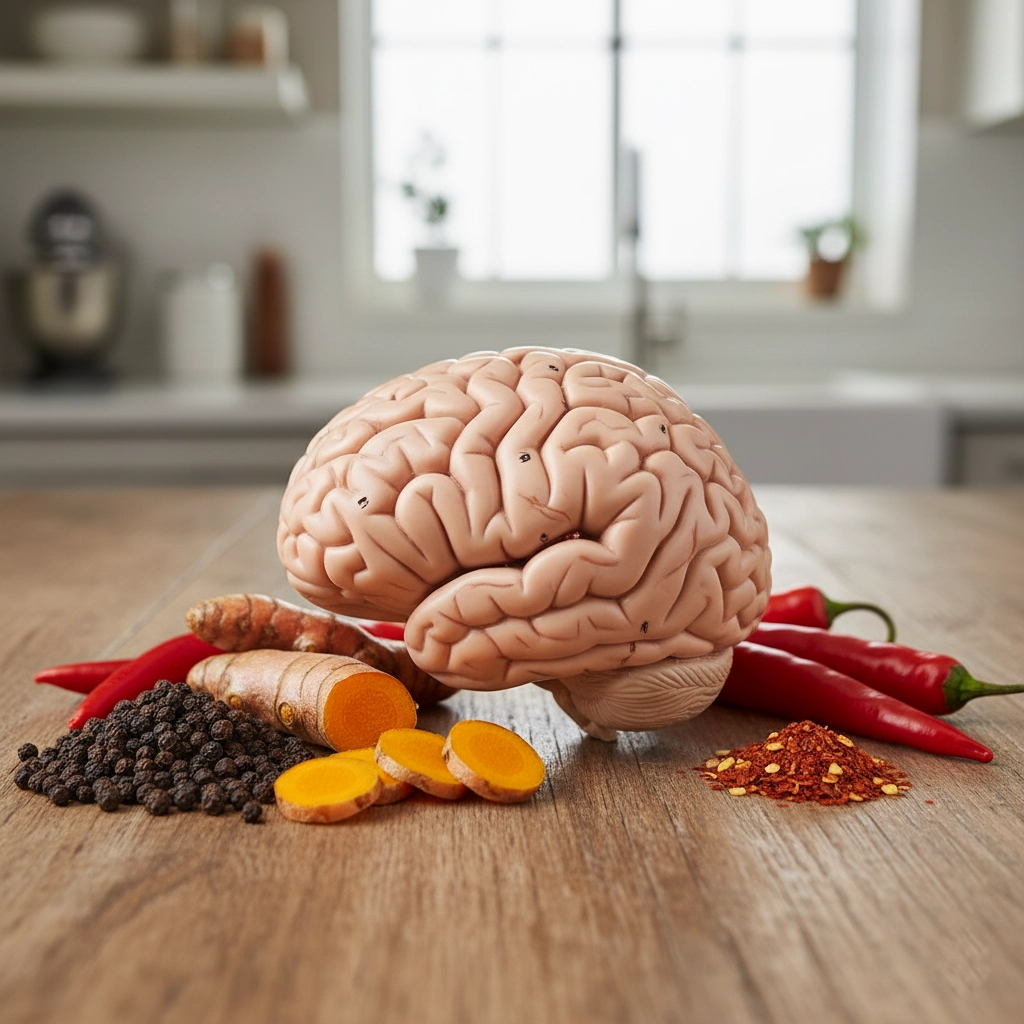
Black pepper (Piper nigrum L.): Its main alkaloid, piperine, has demonstrated anti-inflammatory, analgesic, antioxidant, cytoprotective, antidepressant, antiulcer, and pro-cognitive effects, with evidence of neuroprotection. (8–16)
Turmeric (Curcuma longa): Rich in curcuminoids and turmerone oil, turmeric possesses antioxidant and anti-inflammatory activities. Curcumin can inhibit Aβ fibril formation, destabilize preformed fibrils, and attenuate lipid peroxidation in animal models. (17–26)
Chili pepper (Capsicum annuum L.): Provides capsaicin, vitamins, carotenoids, and polyphenols with antioxidant activity; it has been associated with increased ACh availability and potential benefits in neurodegenerative disorders. (27–30)
Although several drugs are approved (AChE inhibitors, anti-inflammatories, receptor antagonists, MAO inhibitors), their tolerability is often limited by adverse effects. (31) This has motivated interest in natural compounds. The present study investigates pepper, turmeric, and chili oleoresins in a scopolamine-induced cognitive impairment rat model.
Results and Discussion (Summary)
Behavior (MWM and Locomotor Activity)
Scopolamine increased locomotor activity. Treatment with chili oleoresin and donepezil reduced this hyperactivity, whereas pepper and turmeric produced little change. In the Morris Water Maze, pepper and chili significantly improved escape latency time (ELT) and time spent in the target quadrant (TSTQ), indicating enhanced learning and memory. Turmeric showed a milder effect.
Biochemical Biomarkers
Scopolamine increased AChE activity and lipid peroxidation (MDA) while decreasing levels of GSH, GPx, SOD, and catalase. Oleoresins—especially chili—reduced AChE activity and oxidative stress, partially restoring antioxidant defenses. Pepper and turmeric also contributed, albeit to a lesser extent.
Histopathology
Scopolamine treatment led to neuronal degeneration and hippocampal atrophy. Oleoresin treatments mitigated this damage, with pepper and chili demonstrating greater neuroprotection against disorganization of the pyramidal layer.
Conclusions
Chili and pepper oleoresins exhibited neuroprotective and pro-cognitive effects in rats with scopolamine-induced Alzheimer-like impairment, including inhibition of AChE activity, reduction of oxidative stress, and improved memory performance. These findings support the potential of spices as natural candidates for the management of cognitive decline, justifying further studies on Aβ, tau, and inflammatory cytokines, as well as translational validation.